





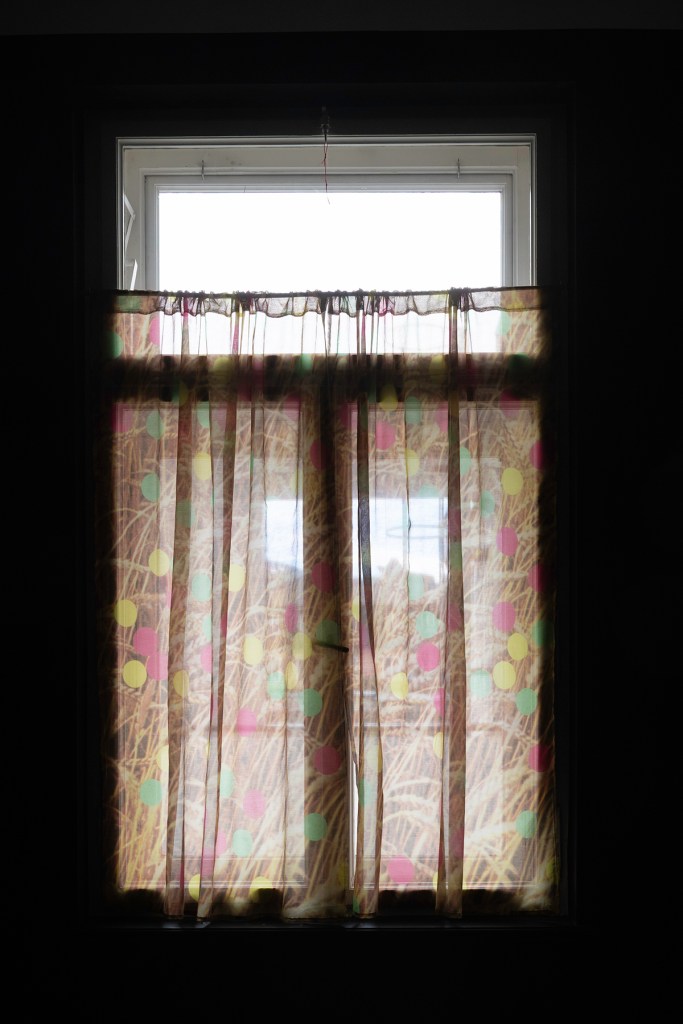
Collage Series
Dimensions Variable
The series was first presented as Viny prints and Silk Curtain textiles at the solo exhibition,
Seeding Circles, KUNSTRAUM INNSBRUCK, 7 March 2025 – 10 June 2025
Curated by Ivana Marjanović
https://www.kunstraum-innsbruck.at/en/program/seeding-circles
It was also presented as a Viny prints at Photo London 2024, 14-18 May 2025
Positions curated by Maria Sukkar
https://photolondon.org/positions/
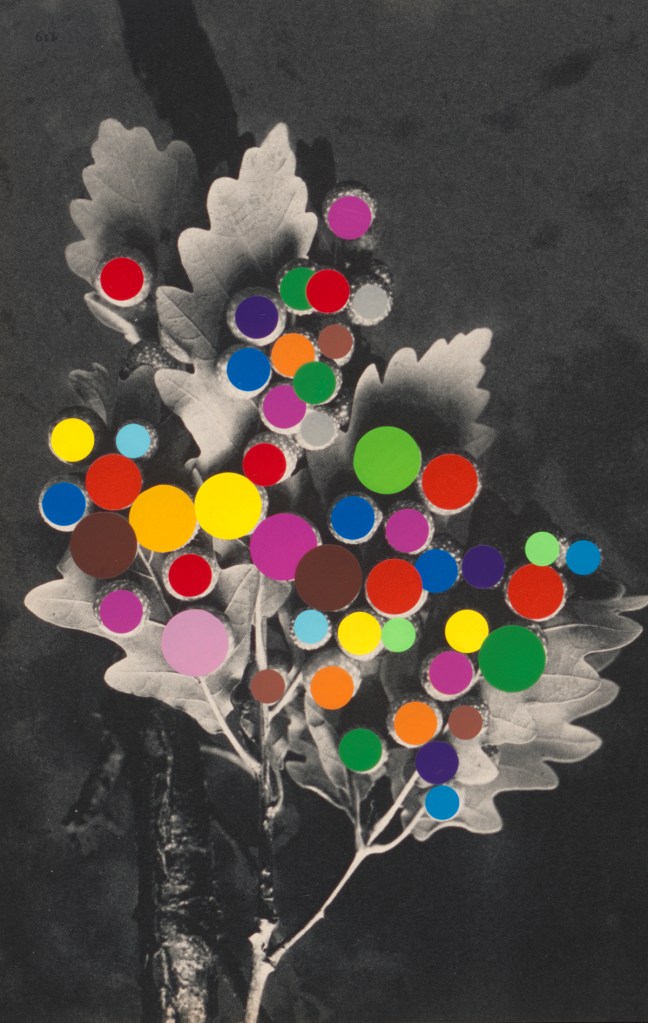
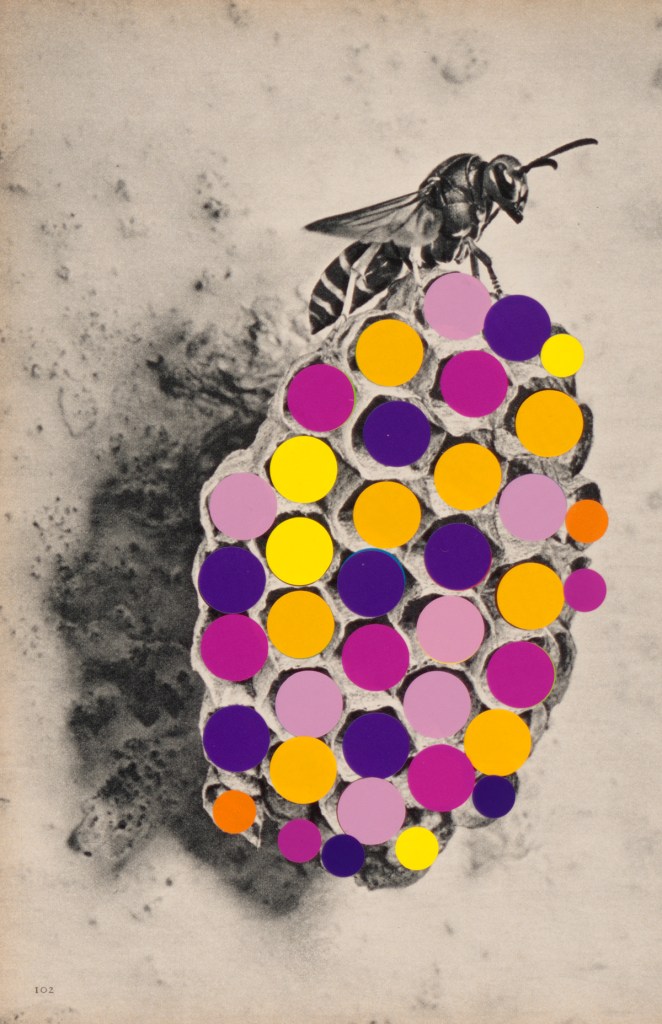
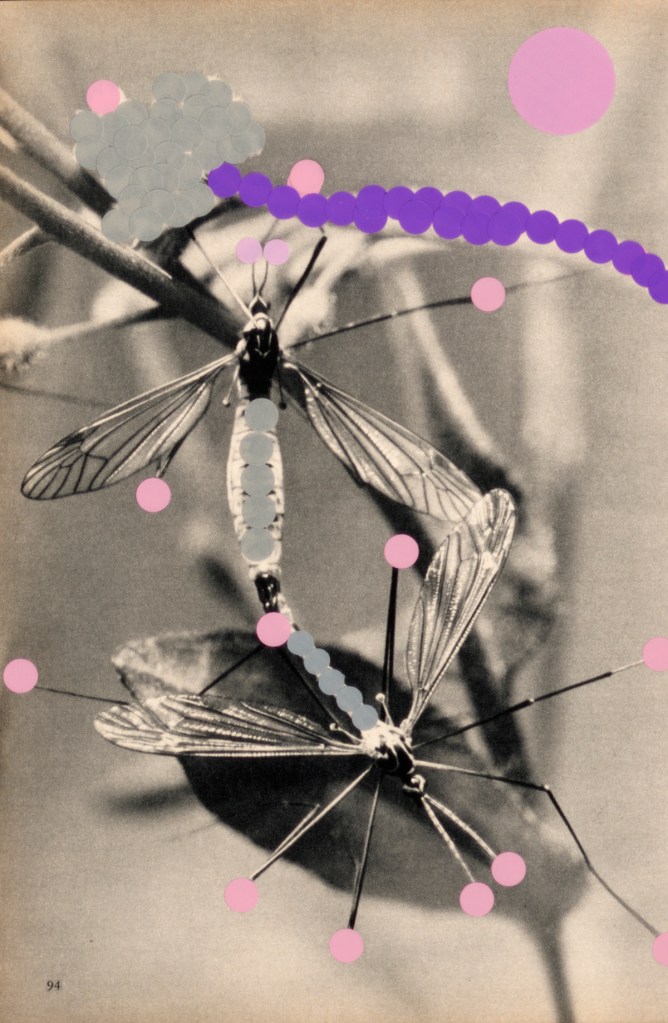
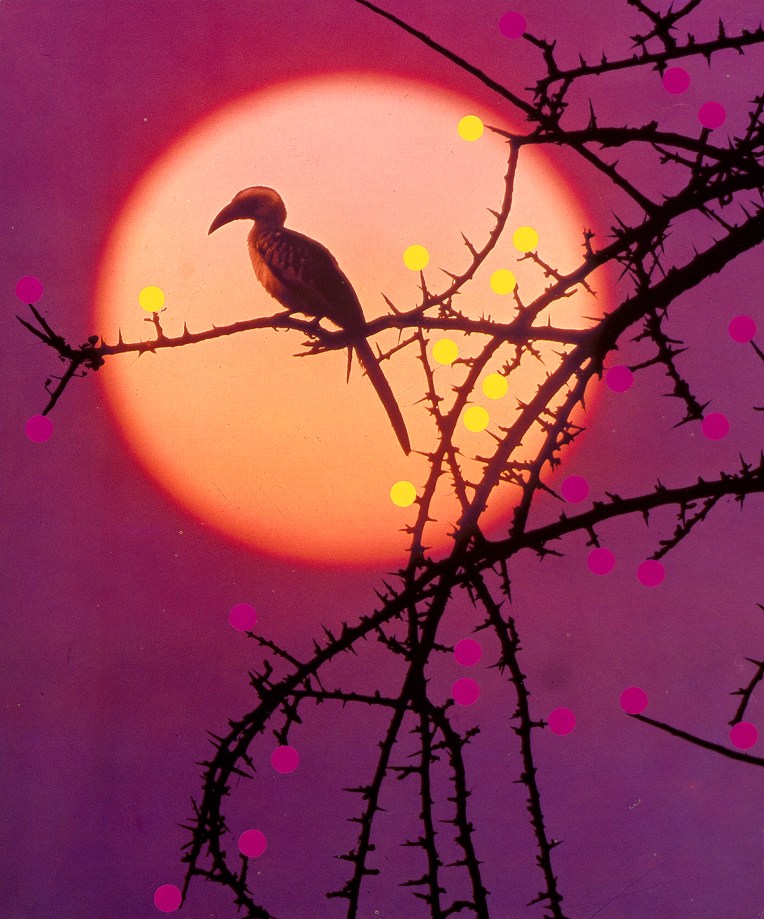
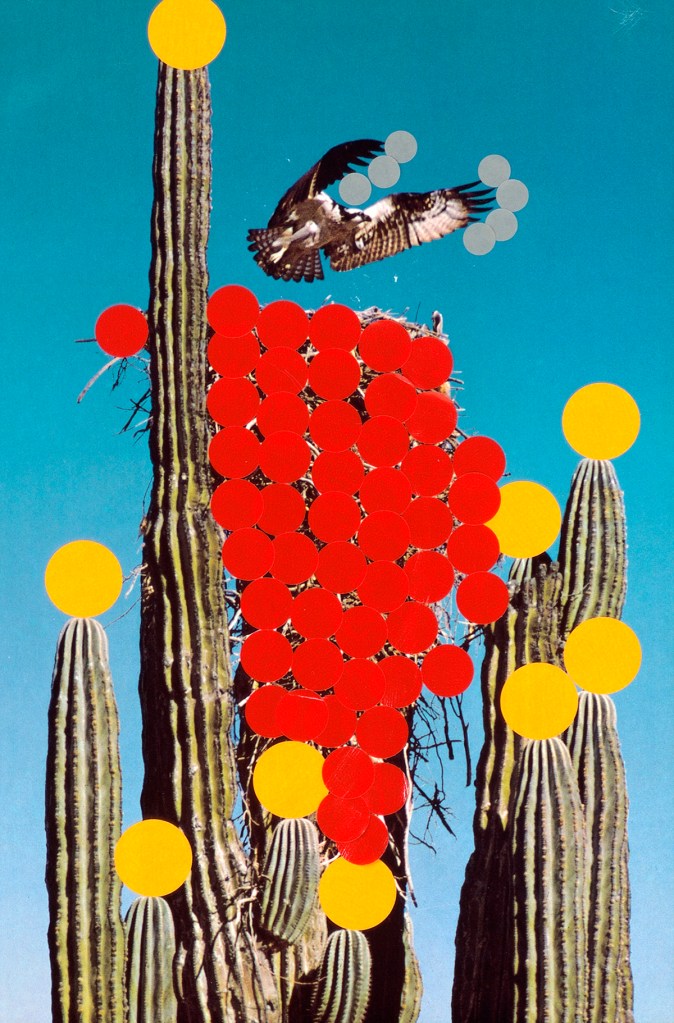
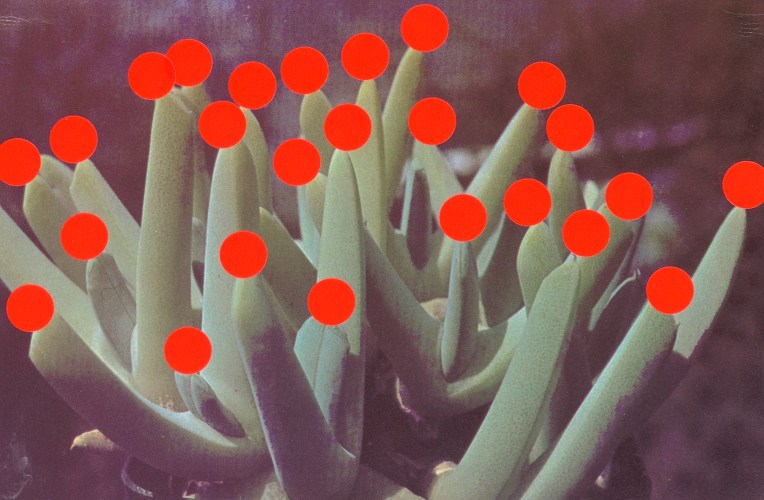
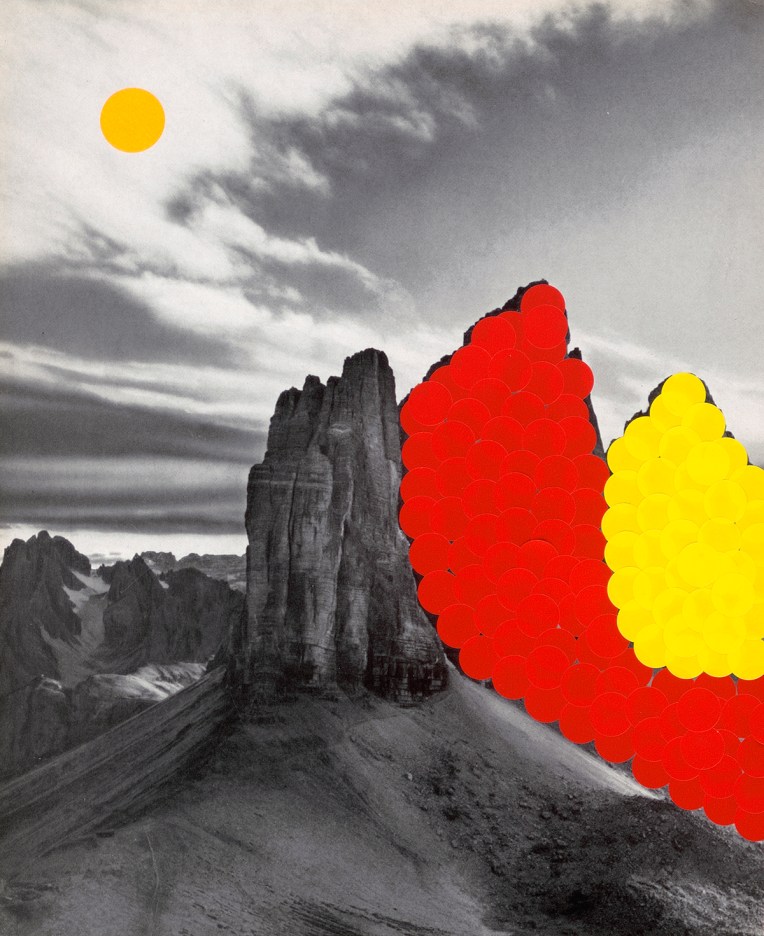
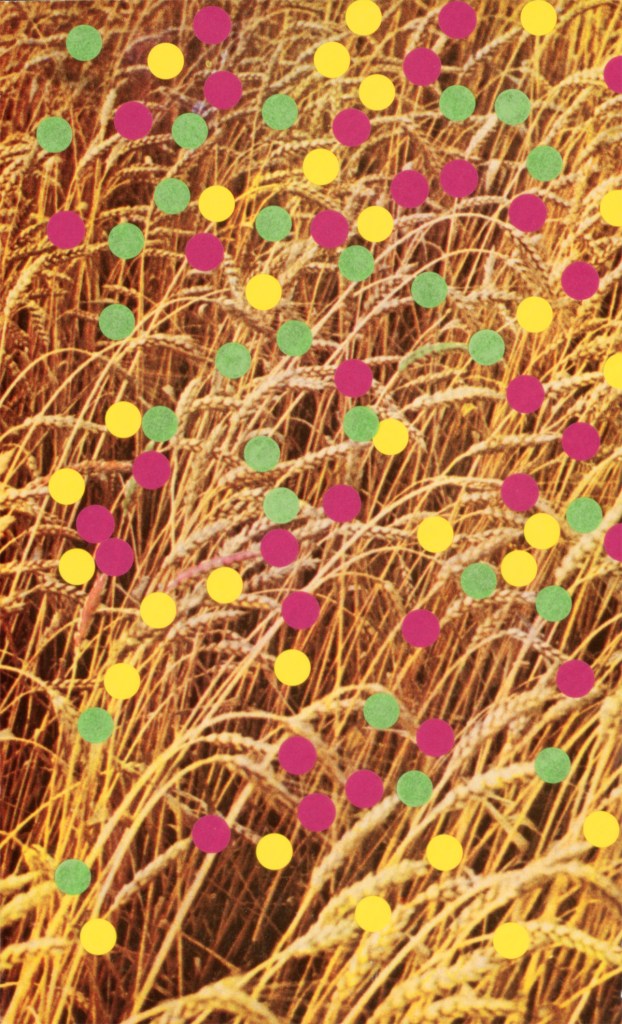
What happens if we only see in circles? is a collage series that interrogates vision, nature, and the photographic medium itself—using adhesive dots to rework found images of animals, wildlife, and mountainous landscapes. Sourced from disparate archives of landscape and wildlife photography, these images are reconfigured through the meticulous application of adhesive dots, then enlarged into expansive inkjet prints on various surfaces, ranging from paper, vinyl, and textiles. The series engages with photography’s expanded field, probing its dual histories: the early Romantic belief in the medium’s capacity to capture the unseen (spirits and auras) and its later instrumentalization as a tool of scientific mastery, enforcing a regime of visibility that sought to categorize and dominate nature. By collaging these images with the circular intervention of the adhesive dots —a gesture both playful and disruptive—the project undermines photography’s claim to objective representation. The dots act either as colour glitches, or as outlining mechanisms, in both cases reframing the image.
What happens if we only see in circles? interrogates a fundamental paradox: how the circularity of the eye—mirrored in the curvature of camera lenses—ultimately produces rectangular or square visions. It questions the tension between organic perception and technological framing, where the cyclical rhythms of nature (the lunar cycles, seasonal returns, orbital patterns) collide with the rigid geometries imposed by photographic apparatuses. This dichotomy extends to gendered ways of seeing. Circular motifs have long been associated with female experience—the uterine, the cyclical, the iterative—often serving as shorthand for female imagination in art historical and literary discourses. Yet photography’s dominant formats (the print, the screen, the grid) enforce a rectilinear order that privileges linear narratives and compartmentalized vision. What emerges are emotional landscapes, not documents of nature, but meditations on how we construct it through technology and myth.
 Aikaterini Gegisian